Empuriabrava
INFOSProject: REFURBISHMENT OF A PRIVATE APARTMENT
Completion date: 01/2025
Location: Empuriabrava, GIRONA SPAIN
Architect: Paola Bagna
Area: 62 m2
CREDITSContractor: Reformes i Construccions Julio Chaves
Carpenter: Fusteria Henares
Metalsmith: Silpar
Photographer: Lluís Català
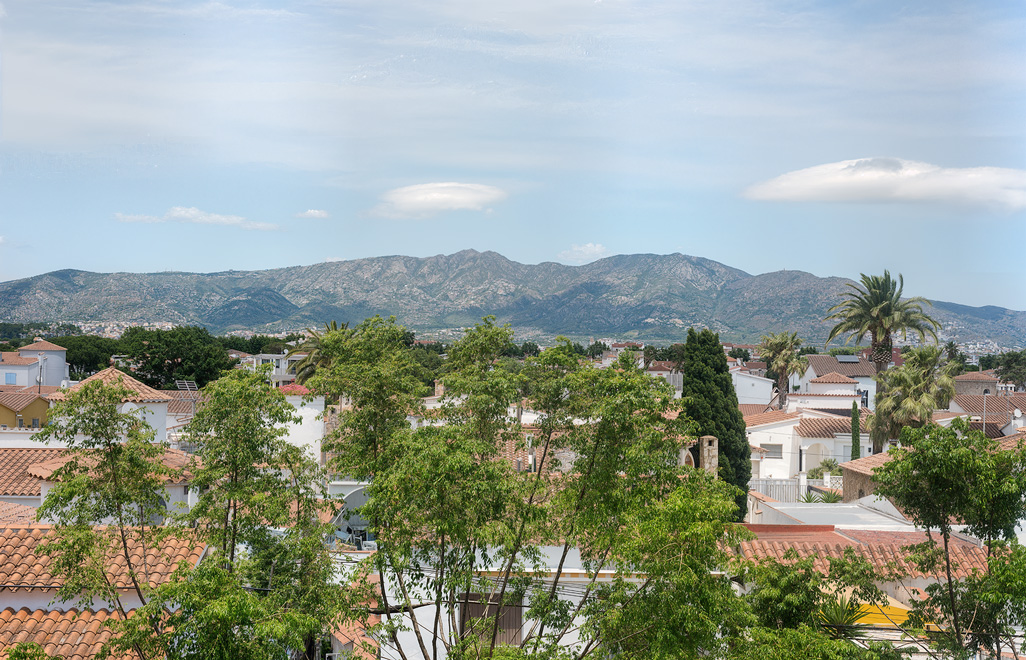
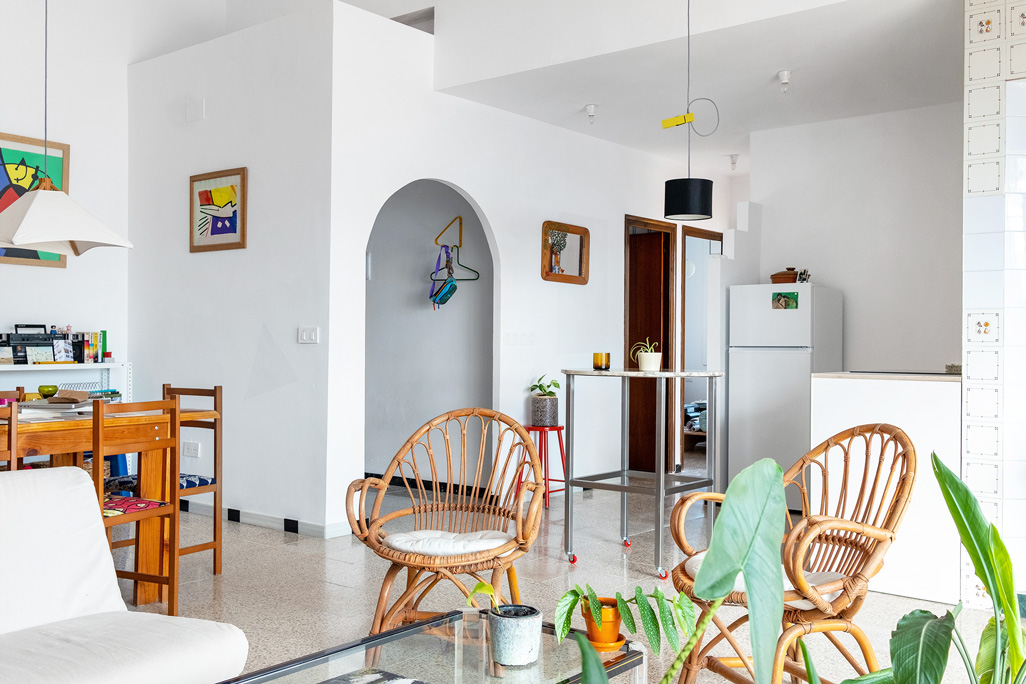
The Ca la Pao project is the renovation of a 62 m² apartment in the Catalan town of Empuriabrava. The apartment stands in a residential building from 1982 which, along with many other buildings in the area, was originally intended to be used for holiday housing. The whole of Empuriabrava was built from scratch in 1968 and has been surrounded by the Aiguamolls de l’Empordà Natural Park, when the natural environment was declared a protected area in 1983.
At present, speculative logic dominates new development in the area, namely the demolition of the town’s 1970s and 1980s architectural heritage and the construction of new housing -never truly intended to become homes- whose disproportionate scale replaces garden vegetation with concrete paving.
By contrast, the demolished older buildings were smaller and were surrounded, almost concealed, by dense garden vegetation. Contemporary developments neither dignify the place nor acknowledge the natural environment that surrounds it.
In the face of this, Ca la Pao:
- Recognizes the aesthetics of the 1970s and 1980s as intrinsic to both the building and the place, highlighting and integrating them into the new spaces, particularly through the preservation of original materials.
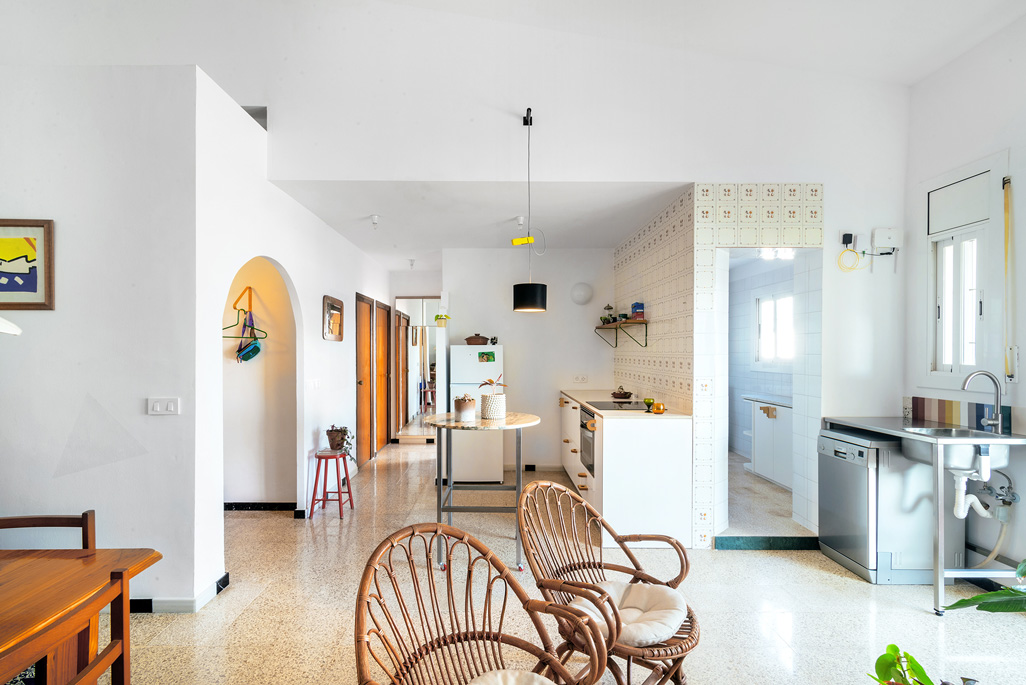
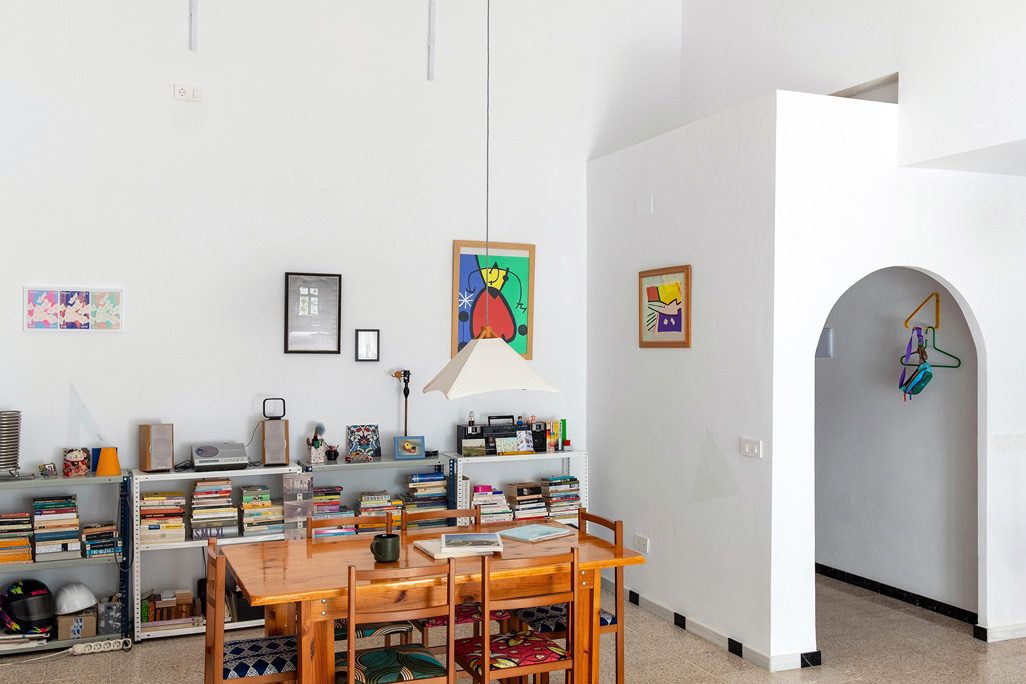
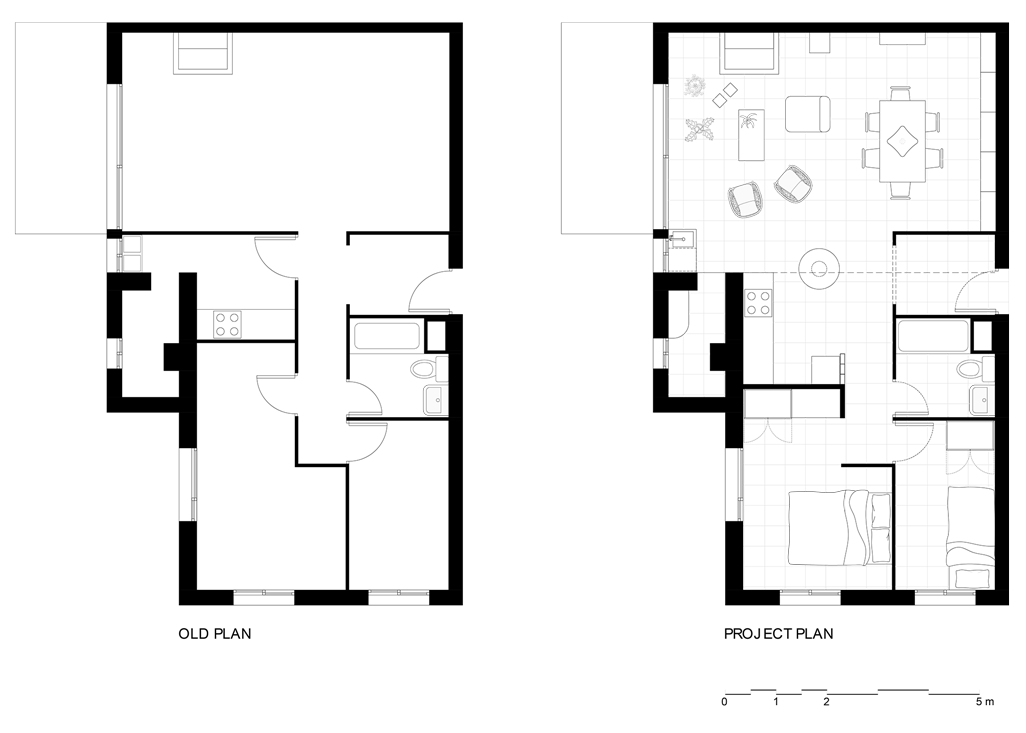
- Creates an open-plan space that is as bright as possible, capable of accommodating multiple functions (living, cooking, dining). Two small bedrooms and one bathroom are the only fully enclosed spaces within the apartment.
- Avoids drastic changes to the original layout of services. As a result, the process of cooking is distributed across different points in the space and is resolved through custom-made furniture located where needed: a circular island and a water zone.
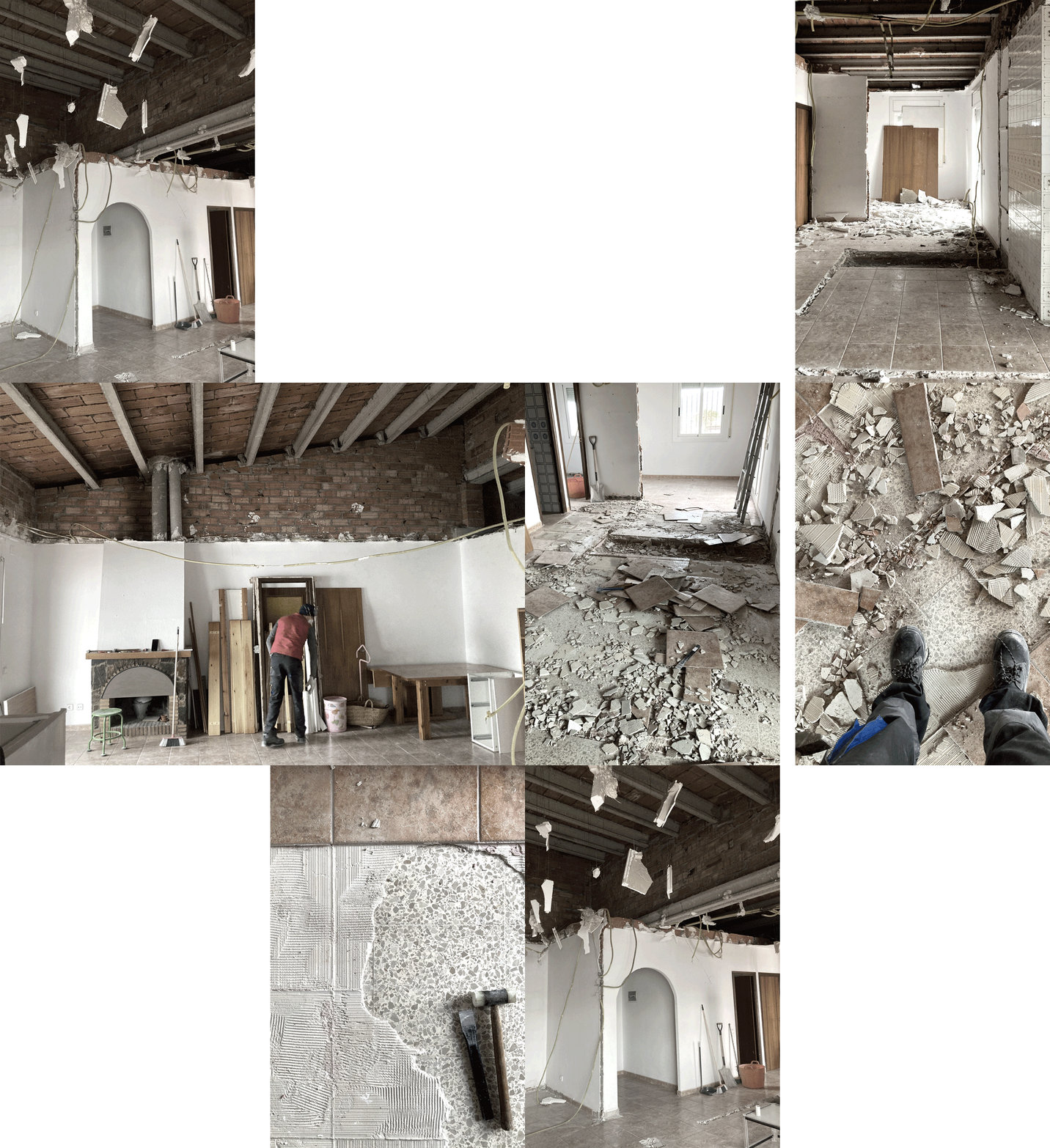
- Develops largely through self-construction, the recovery of original materials, and the local sourcing of second-hand materials, with the aim of making the project as circular as possible, reducing its carbon footprint.
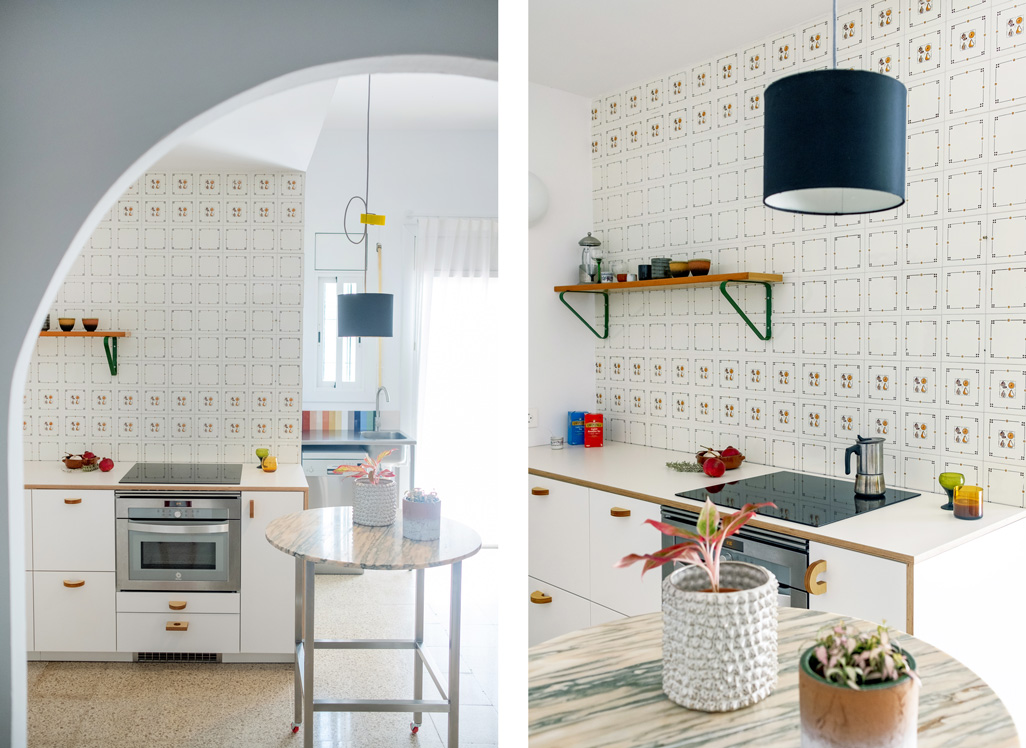
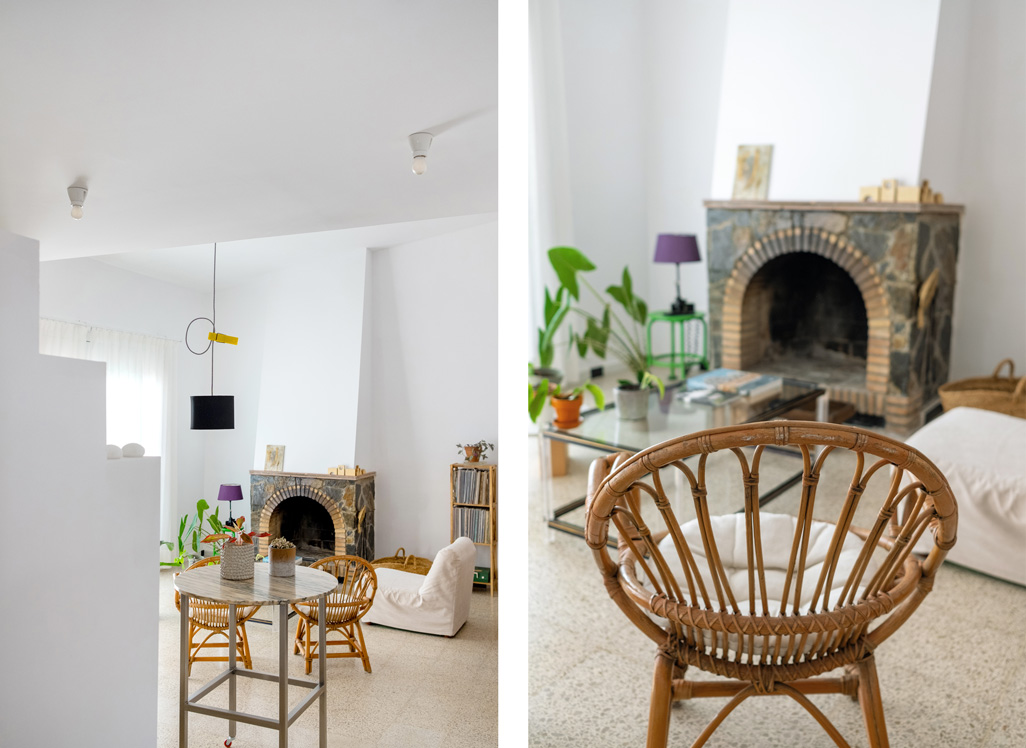
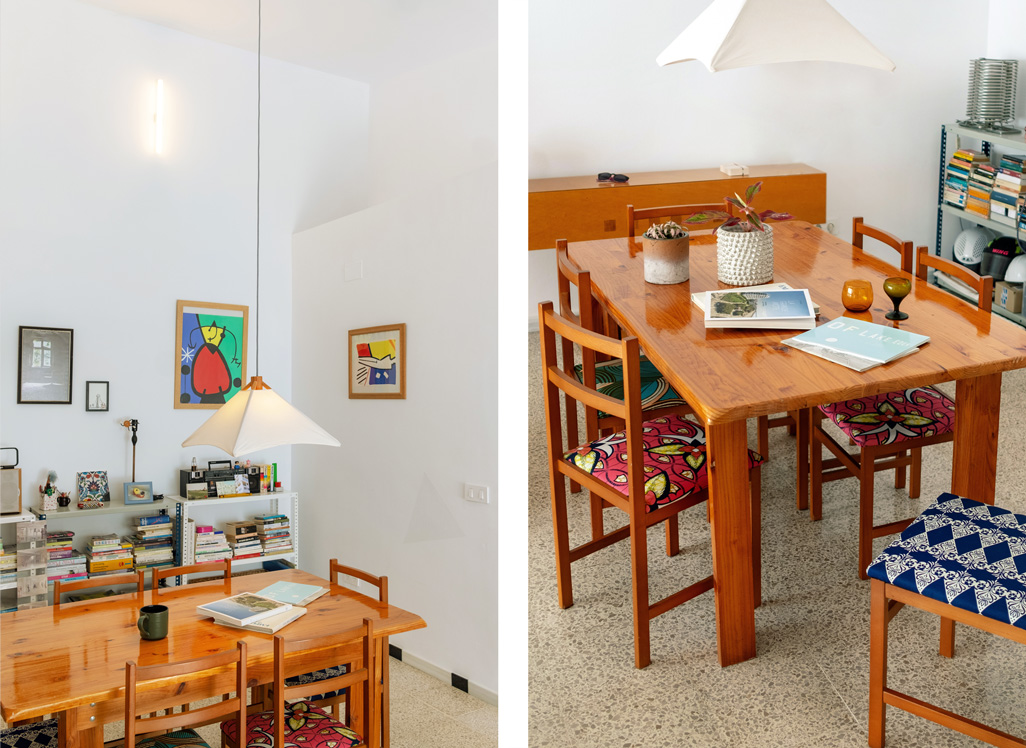
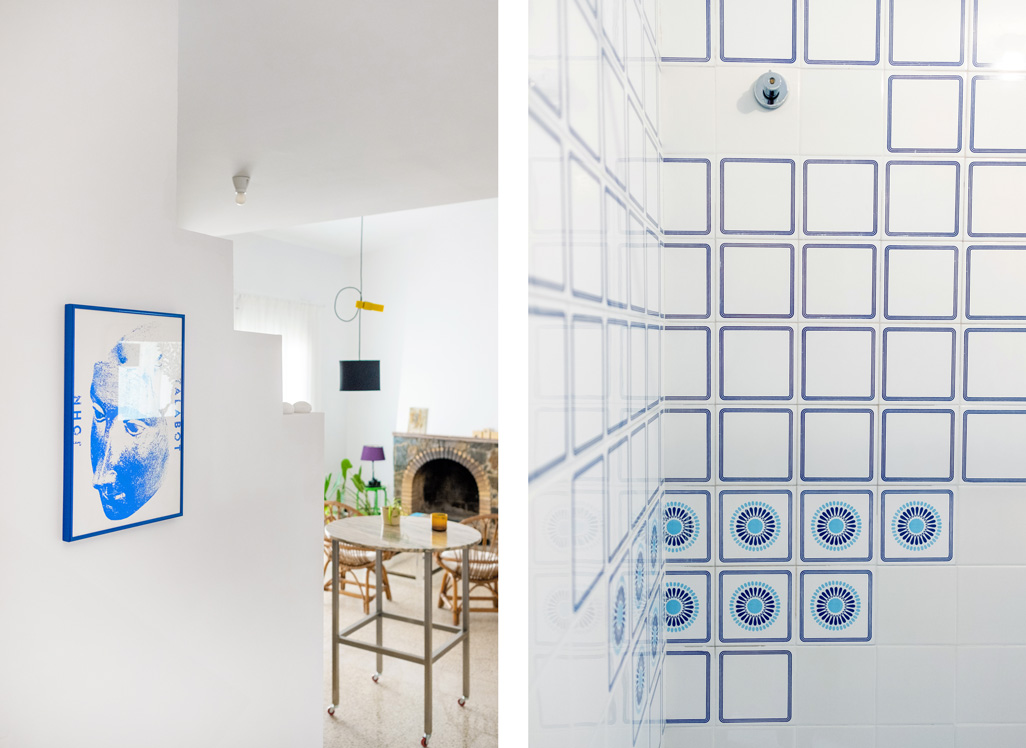
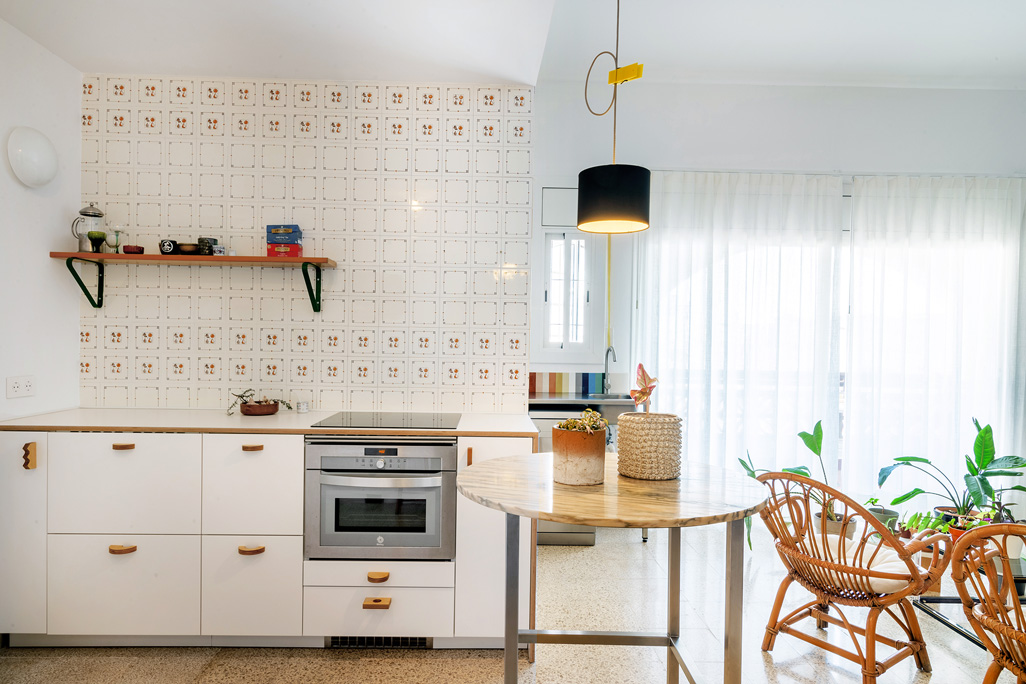
As the apartment occupies the top floor of a two-storey building, removing the plasterboard suspended ceiling reveals a new volume beneath the pitched roof, increasing the height of the main space. This height is further emphasized by suspended light fixtures illuminating the table and the kitchen island. Along with the increase in ceiling height, the original fireplace is reworked, giving the flue a more central and sculptural presence.
The entrance area is defined by a former vestibule that, through a semicircular arch, frames the original kitchen wall tiles as a design statement immediately upon entry, thus becoming part of the main living area, almost forming a mural.
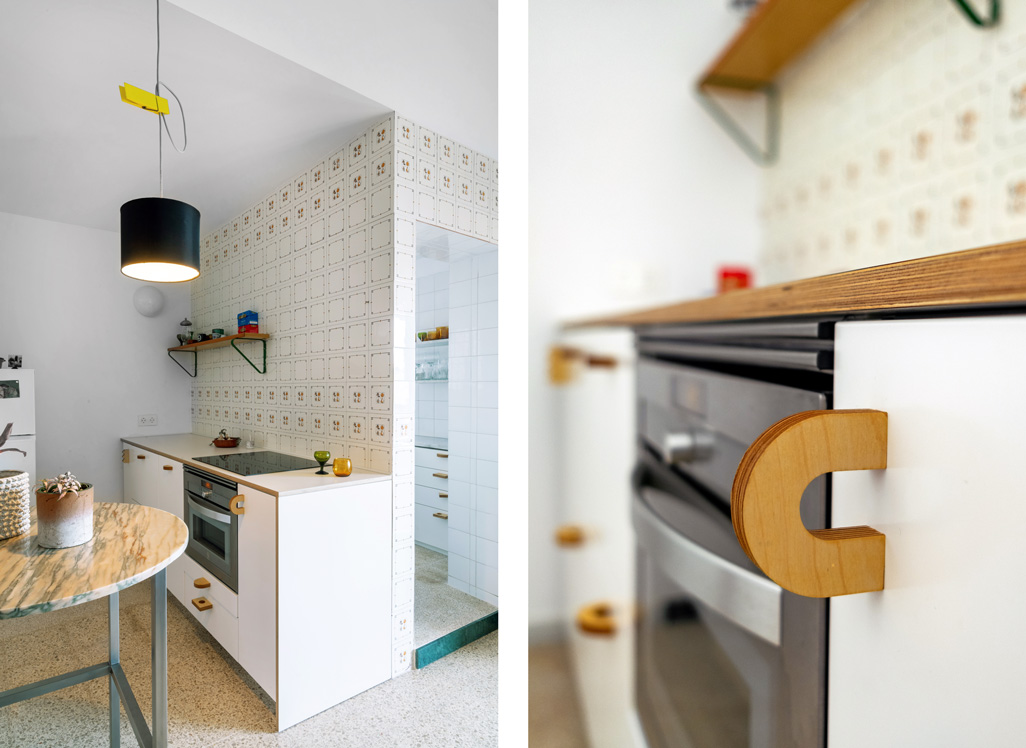
The cooking area is lower in height, recalling the apartment’s original 260 cm suspended ceiling before it was removed. The kitchen modules are from IKEA, and the handles are made of birch plywood, each one unique and laser-cut.
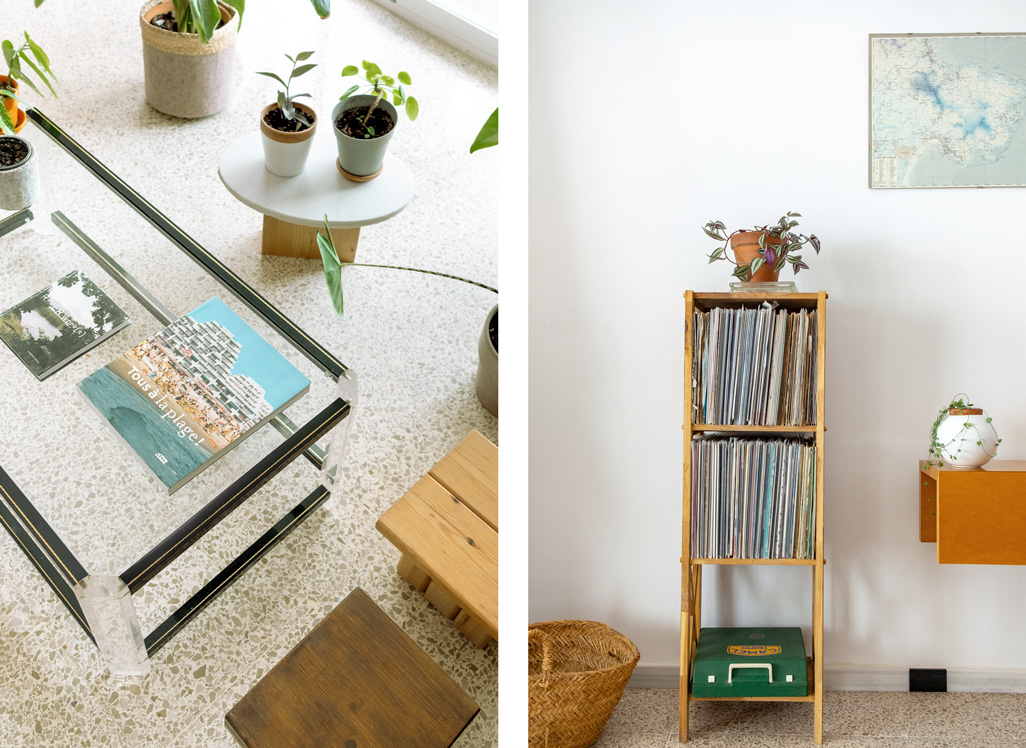
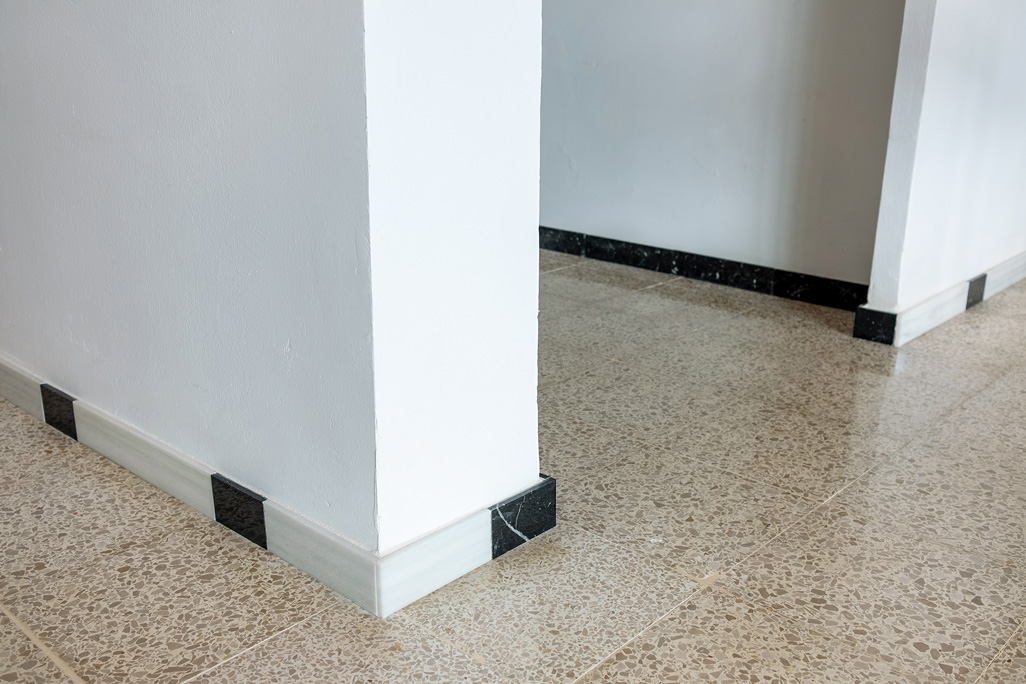
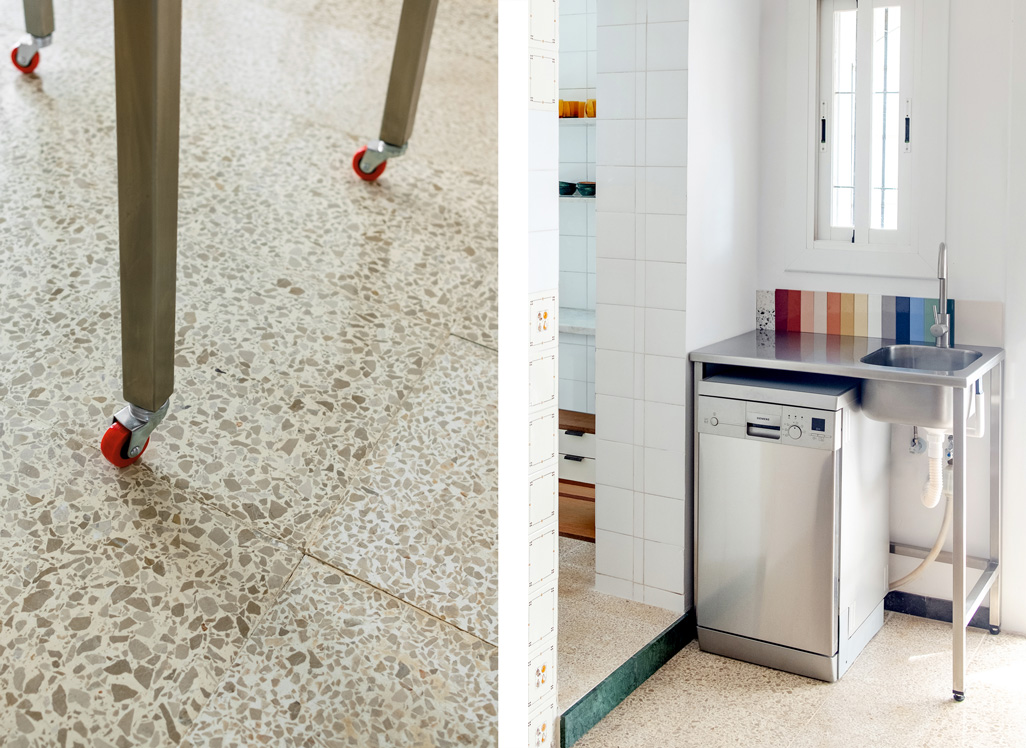
The original terrazzo floor tiles are recovered from beneath a layer of ceramic tiles which were laid in a previous renovation. Through second-hand sales platforms, terrazzo of the same color and dimensions, but with a finer aggregate, is sourced locally, and the removed tiles are donated. The white, black, and green marble skirting is supplied by Leleni Studio, which recovers marble remnants from the yard of a marble workshop that is no longer active in the Alt Empordà region.
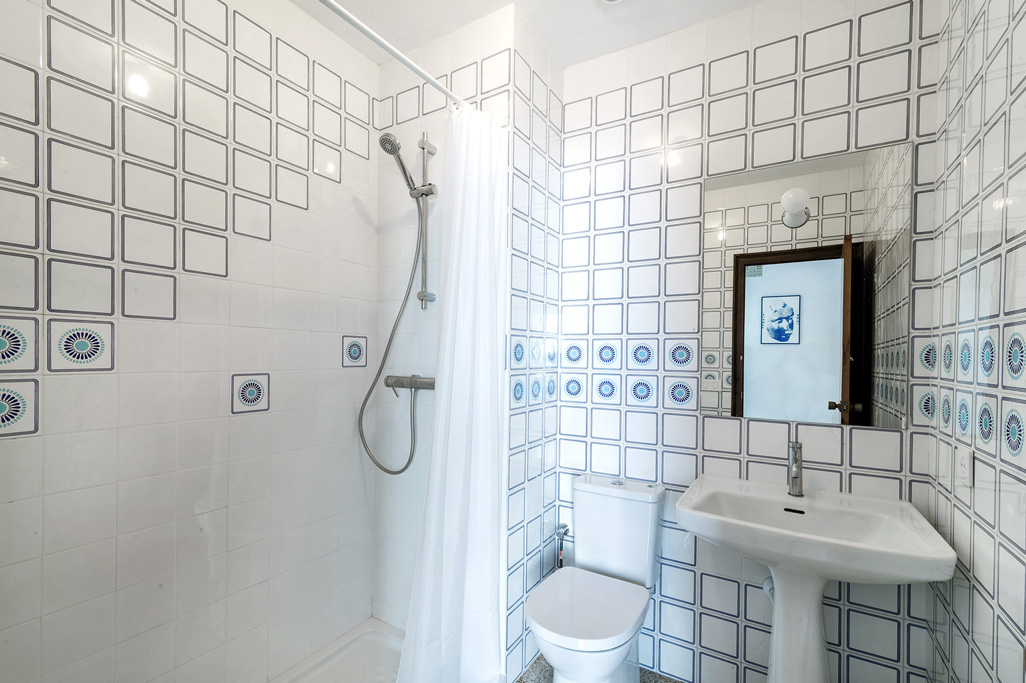
The kitchen island consists of a mobile stainless steel structure, topped with an 80 cm diameter piece of second-hand pink Aurora marble from Portugal. The water zone is also custom-made in stainless steel, making use of a gifted dishwasher and various samples of coloured tiles to form the backsplash. The rest of the furniture is reclaimed. The bathroom remains largely intact: the bathtub is simply replaced with a shower tray, and white tiles are added in the areas previously occupied by the tub, forming a stepped border. A similar stepped detail appears in a partition wall that integrates the refrigerator into the kitchen area and is reflected in the bathroom mirror. The roof is upgraded with new thermal insulation, and the building services are modernised, including the installation of an aerothermal system for domestic hot water.
The reuse of original materials and the incorporation of second-hand materials sourced locally result in a saving of 1 tonne of CO₂ for this project, equivalent to a 5,000 km car journey.
Despite its limited budget, Ca la Pao represents the creation of a home and a container for memory, both past and future. It is a space for creativity and family life, inviting reflection on the place in which it is situated, taking it as a source of inspiration.